Ruby — Talisman Stone: Meaning, Properties and Who It Suits
Ruby as a talisman stone: the origin of red corundum, which zodiac signs it suits, its status as the "king of gems" in India, and how to spot a fake.
Meaning and origin of the stone
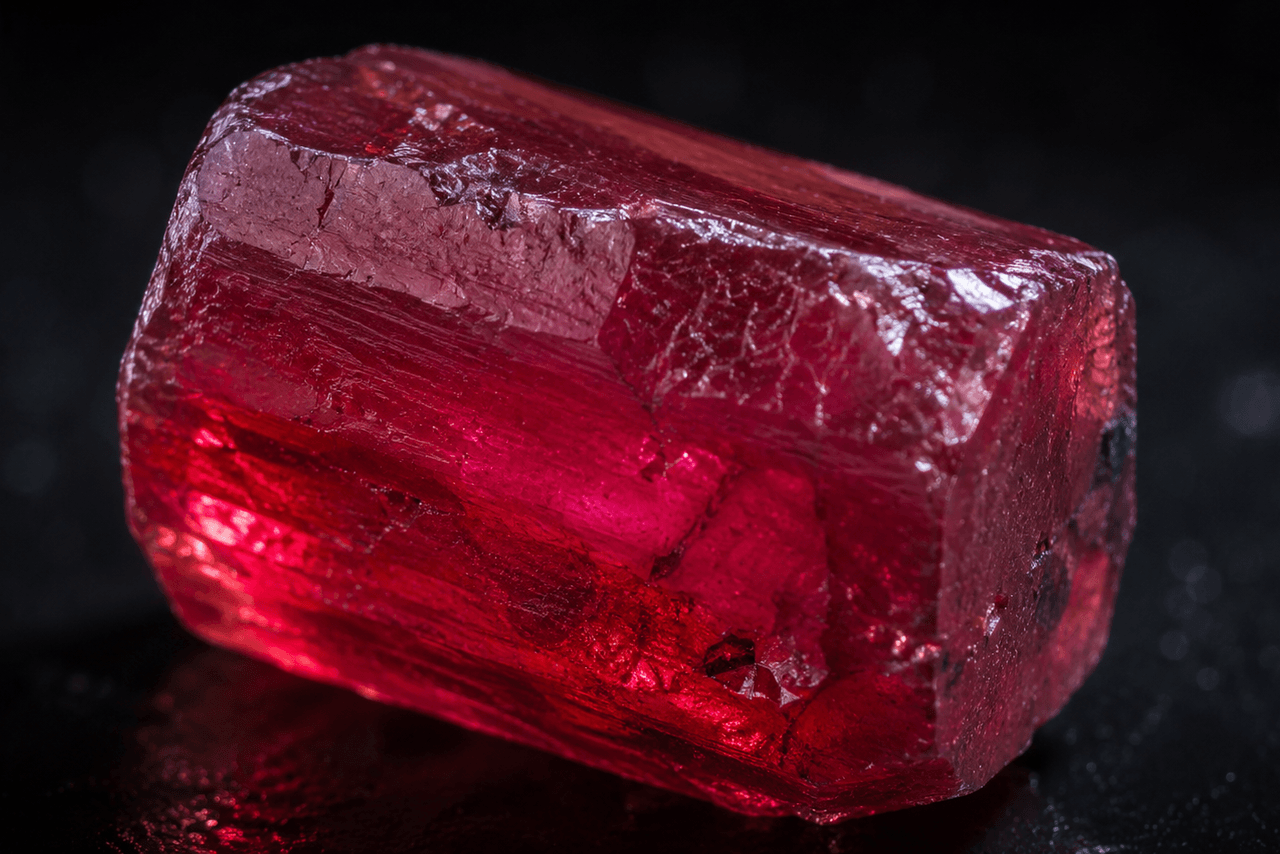
Ruby is a red variety of corundum, aluminum oxide — the same mineral as sapphire (every corundum color besides red is called sapphire, regardless of shade). Traces of chromium give ruby its rich red, and the most prized stones — with a "pigeon's blood" tint mined in Myanmar — have historically cost more than diamonds of comparable size.
In ancient India, ruby carried the title ratnaraj, "king of precious stones" — believed to protect its owner from danger better than any other gem. Warriors in some Asian cultures literally implanted small rubies under their skin, believing it would make them invulnerable in battle.
Which zodiac signs it suits
Ruby is one of the few stones in this collection tied to three signs at once: Aries, Leo and Capricorn. For all three, tradition holds that the stone adds decisiveness and vital force: for Aries it helps act boldly and go first, for Leo it supports generous, open expression of feeling, and for Capricorn it helps voice ambition out loud rather than only pursuing it quietly.
That broad reach comes down to the stone's own nature — ruby is traditionally considered one of the most "active," energetically charged gems, suited to anyone who needs more decisiveness in life.
Traditional and esoteric properties
Ruby has long been tied to vital force, passion and physical energy — it's no accident the stone was associated with blood and the heart, a symbol of life itself. In the Middle Ages, ruby was believed to guard against poison and blood disorders, and European monarchs wore it as a symbol of power and martial valor.
Ruby is also credited with protecting against danger on the road and in battle — traditionally given to warriors and travelers as a charm against wounds, said to grant courage at a decisive moment.
How to spot a fake and care for the stone
Genuine ruby almost always contains tiny inclusions visible under a loupe — characteristic fine rutile needles ("silk") or small companion crystals. A flawlessly clean bright red stone with no defects at all is more often a synthetic ruby (chemically identical to a natural one, but lab-grown) or dyed glass.
Ruby's hardness is 9 on the Mohs scale — second only to diamond among natural minerals, so the stone practically never scratches in everyday use. Even so, avoid sharp knocks against the stone's facets, and store ruby jewelry separately from softer gems it could scratch.
Through Leo, ruby sits alongside diamond; through Capricorn, alongside garnet. All 28 talisman stones are gathered on the talismans hub.
FAQ
This material was prepared by the Elunis editorial team: calculations via Astronomy Engine (based on the VSOP87 and NOVAS models, verified against JPL Horizons data), interpretations based on verified sources. How we prepare our articles