Lapis Lazuli — Talisman Stone: Meaning, Properties and Who It Suits
Lapis lazuli as a talisman stone: the origin of the blue rock with golden flecks, which zodiac signs it suits, its role in art history, and how to spot a fake.
Meaning and origin of the stone
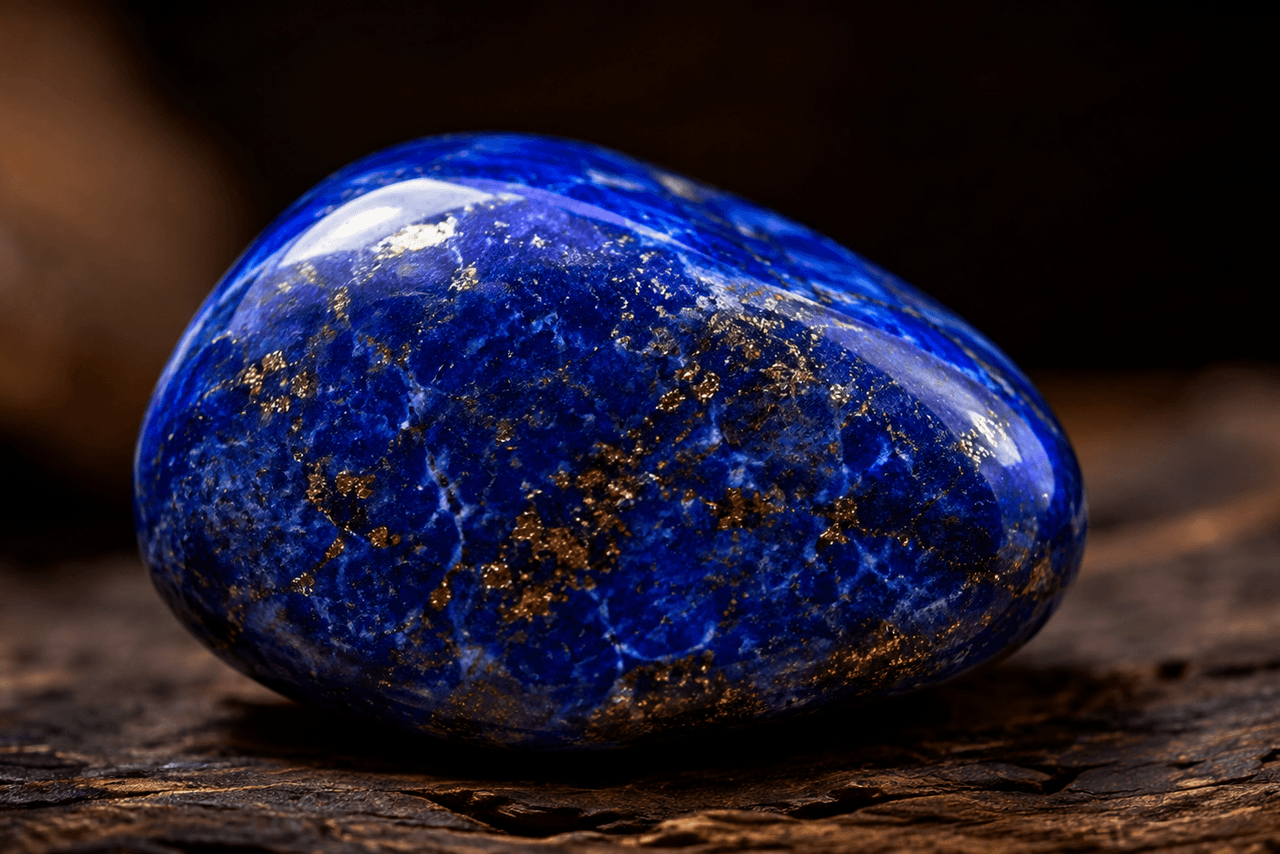
Lapis lazuli isn't a single mineral but a rock made up mostly of the mineral lazurite (which gave the stone its name), marked by characteristic pyrite flecks — golden sparks against a deep blue field — and white calcite veining. The main historic source is the Sar-e-Sang mines in Afghanistan, worked for more than six thousand years.
The stone was one of Ancient Egypt's great treasures — it appears in Tutankhamun's burial mask — and later, during the Renaissance, ground lapis lazuli produced ultramarine, the most expensive blue pigment in the history of painting; artists reserved it for the most important parts of a canvas: the sky and the robes of the Virgin Mary.
Which zodiac signs it suits
Lapis lazuli is traditionally tied to three signs at once — Libra, Sagittarius and Aquarius. For Libra it's said to help defend fairness in disputes; for Sagittarius, to broaden perspective and not shy away from blunt honesty; for Aquarius, to shape unconventional ideas so they're actually heard and understood.
What all three signs share is a value placed on honest, open dialogue — and that's exactly the quality lapis lazuli is traditionally said to strengthen.
Traditional and esoteric properties
Lapis lazuli has long carried the idea of wisdom, clarity of thought and spiritual depth — in Mesopotamia and Ancient Egypt the stone was considered so valuable that it was reserved for the jewelry of rulers and priests, its deep blue read as a reflection of the night sky and divine order.
The stone is also credited with helping people speak truthfully without fear and listen without prejudice — which is exactly why it's traditionally recommended for anyone whose work involves negotiation, public speaking or resolving conflict.
How to spot a fake and care for the stone
In genuine lapis lazuli, the golden pyrite flecks are distributed unevenly and show the characteristic metallic glint of individual grains — if the "gold" looks like an even sparkling dust with no structure, you're likely looking at dyed jasper or a synthetic imitation. A real stone also won't fade or rub off onto a damp cloth.
Lapis lazuli's hardness is only 5–5.5 on the Mohs scale; it's porous and sensitive to acids, perfume and household chemicals — clean it only with a dry, soft cloth and avoid ultrasonic cleaners.
In depth of symbolism, lapis lazuli sits close to turquoise — both were revered in Ancient Egypt as heavenly charms — and shares its zodiac sign with sapphire. All 28 talisman stones are gathered on the talismans hub.
Suits these zodiac signs
FAQ
This material was prepared by the Elunis editorial team: calculations via Astronomy Engine (based on the VSOP87 and NOVAS models, verified against JPL Horizons data), interpretations based on verified sources. How we prepare our articles