Malachite — Talisman Stone: Meaning, Properties and Who It Suits
Malachite as a talisman stone: the origin of the banded Ural stone, which zodiac signs it suits, Slavic lore protecting children, and how to spot a fake.
Meaning and origin of the stone
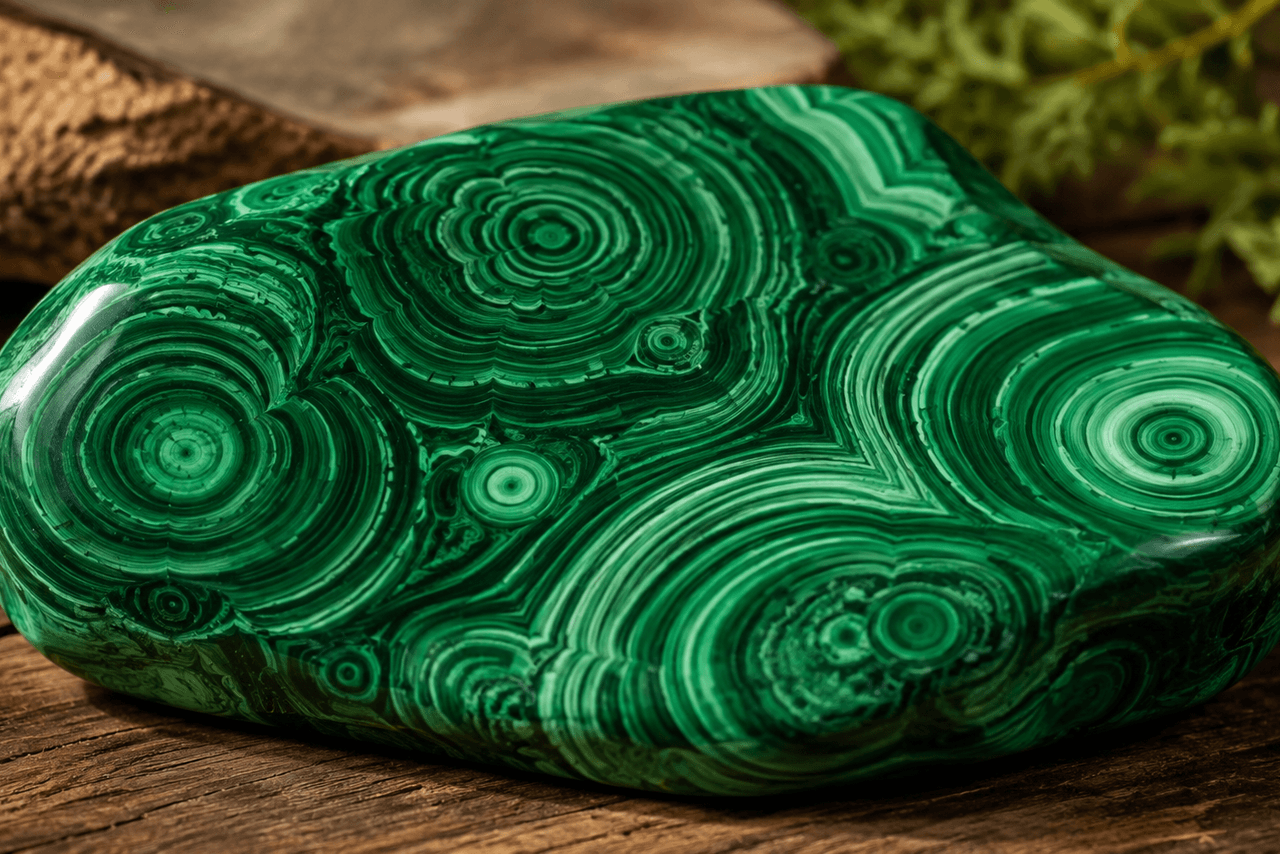
Malachite is an opaque copper carbonate mineral that forms in the oxidation zone of copper deposits. Its signature bright green color, patterned with concentric bands of varying intensity ("peacock eye"), is a direct result of the stone's layered growth, with each new ring taking on a slightly different shade.
The largest historic malachite deposits were in Russia's Ural Mountains — Ural stone was used to line the famous Malachite Room of the Winter Palace and other Hermitage interiors, making the mineral one of the symbols of Russian decorative art in the 18th and 19th centuries.
Which zodiac signs it suits
Malachite is traditionally tied to Taurus and Scorpio — signs for whom persistence and the ability to see intended change through matter especially. For Taurus, the stone is said to help stand firmer on the ground during periods of transformation; for Scorpio, to channel intense inner energy toward conscious, deep change rather than destruction.
What both signs share is resilience in the face of change, and malachite has traditionally served as exactly the kind of guide through such transitional periods.
Traditional and esoteric properties
In Slavic tradition, malachite has long been considered a protector of children — small charms and beads made of malachite were placed in cradles or sewn onto infants' clothing, in the belief that the stone would ward off illness and the evil eye during life's most vulnerable stage.
Malachite is also credited with a "mirror" quality, reflecting hidden truths and exposing falsehood — which is why it's traditionally tied to honesty in relationships and the ability to see the substance of things past their surface. For travelers, the stone served as protection from danger on the road; for merchants, a charm for a successful deal.
How to spot a fake and care for the stone
Genuine malachite has a distinctive, never-repeating pattern of concentric bands of varying thickness and intensity — if the pattern looks too regular or clearly printed, you're likely looking at a plastic imitation or a dyed stone with an applied print. Real malachite is opaque even in the thinnest slice and noticeably heavier than plastic of the same size.
Malachite's hardness is only 3.5–4 on the Mohs scale — it's soft and scratches easily, and it's also sensitive to acids (including sweat and perfume) and high heat, so malachite jewelry is best removed before a shower, exercise or cleaning with household chemicals.
Through Taurus, malachite pairs with emerald; through Scorpio, with obsidian. All 28 talisman stones are gathered on the talismans hub.
Preguntas frecuentes
Este material fue preparado por la redacción de Elunis: los cálculos se hacen con Astronomy Engine (basado en los modelos VSOP87 y NOVAS, verificado con datos de JPL Horizons), las interpretaciones se basan en fuentes verificadas. Cómo preparamos nuestros artículos