Amber — Talisman Stone: Meaning, Properties and Who It Suits
Amber as a talisman stone: the origin of fossilized resin, which zodiac sign it suits, its link to the discovery of electricity, and how to spot a fake.
Meaning and origin of the stone
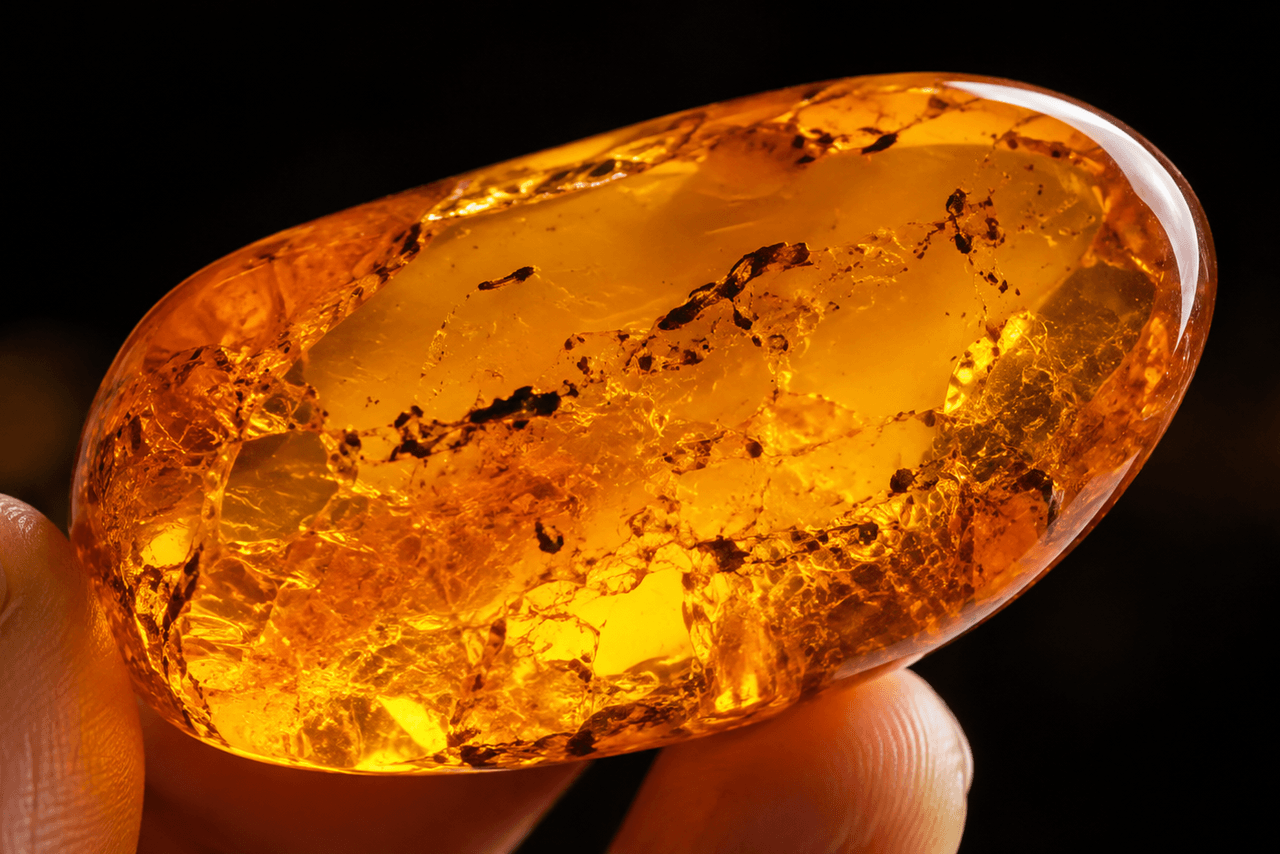
Like pearl, amber isn't a mineral but an organic fossil — the hardened resin of coniferous trees that grew tens of millions of years ago. The best-known deposits lie along the Baltic Sea coast, where amber is about 40–50 million years old; that's exactly why it sometimes contains prehistoric insects and plant fragments, trapped in the resin the moment the tree released it.
Even in antiquity, people noticed amber's unusual property: rubbed with wool, it starts attracting small, light objects. The Ancient Greeks named this phenomenon after their word for amber, "elektron" — and that word later gave us "electricity." So one of humanity's oldest talismans literally lent its name to one of modern physics' central phenomena.
Which zodiac sign it suits
Amber is traditionally tied to Leo — a fire sign ruled by the Sun, whose energy the stone's warm, sunny color reflects almost literally. Amber is said to strengthen Leo's natural vitality and love of life, helping the sign show warmth and generosity without fear of seeming too bright.
Amber's ability to hold a fragment of the distant past within itself symbolically echoes Leo's ability to stay true to itself regardless of the passage of time and changing circumstances.
Traditional and esoteric properties
In Slavic and Baltic tradition, amber has long been considered a protective stone for children — infants were given amber beads in the belief that the stone eased teething pain and warded off the evil eye during life's most vulnerable stage (modern medicine, however, doesn't confirm any pain-relief effect and warns against beads worn around an infant's neck for safety reasons).
Amber is also tied to the idea of sunny, healing energy — traditionally used in folk medicine for general strengthening and as a charm against colds, and sailors carried it on voyages as a talisman believed to bring luck and protection through bad weather.
How to spot a fake and care for the stone
Genuine amber is light enough to float in salt water while sinking in fresh water — a simple home test: drop it into a glass of strongly salted water, and real amber will float while a glass or plastic imitation sinks. Genuine amber also builds up static electricity when rubbed with wool and attracts small scraps of paper — the very property that gave electricity its name.
Amber's hardness is only 2–2.5 on the Mohs scale — softer than most stones in this collection and easily scratched with a fingernail — and it's sensitive to perfume, alcohol and high heat, which can damage its surface. Store amber jewelry separately from other stones and avoid contact with household chemicals.
Through Leo, amber sits alongside diamond and pyrope garnet. All 28 talisman stones are gathered on the talismans hub.
Favorece a estos signos del zodíaco
Preguntas frecuentes
Este material fue preparado por la redacción de Elunis: los cálculos se hacen con Astronomy Engine (basado en los modelos VSOP87 y NOVAS, verificado con datos de JPL Horizons), las interpretaciones se basan en fuentes verificadas. Cómo preparamos nuestros artículos